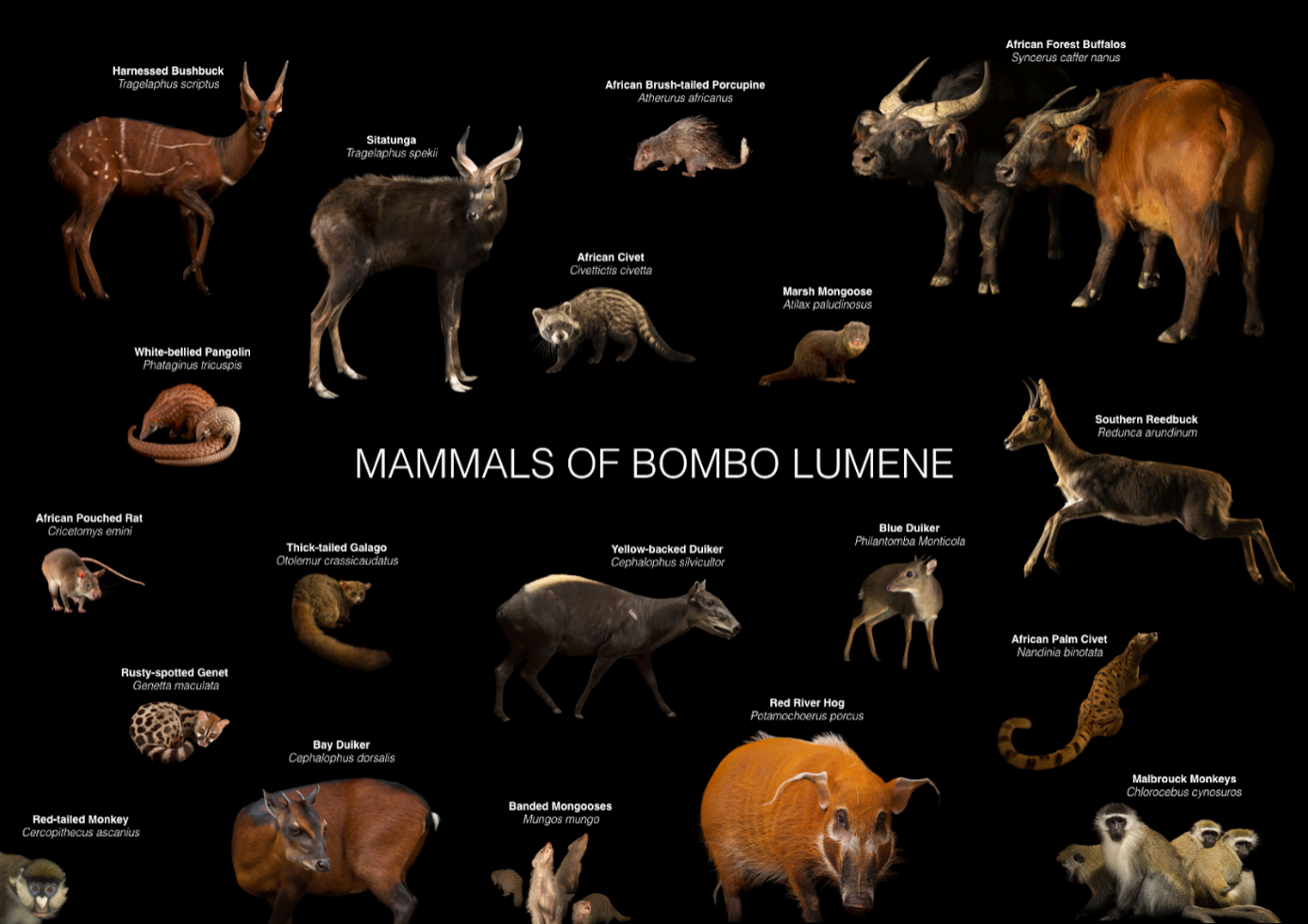
What makes Bombo Lumene unique is that it has a one-of-a-kind ecosystem consisting of open and wooded savanna as well as dense tropical gallery forests. The combination of these two very different habitats means that the reserve is home to both savanna species—such as the side-striped jackal, the woodland duiker, the guib, and Malbrouck’s monkeys—and forest species—such as the forest buffalo, the potamochere, four species of forest duikers, white-bellied pangolins, red-tailed monkeys, and southern talapoin, among many others.
Historically, Bombo Lumene was home to large populations of megafauna such as elephants, lions, Defassa cob, southern cob, hippos, forest buffalo, and spotted hyenas, among others. However, intense hunting pressure decimated these populations and led to the local extinction of many of these species, notably the Defassa cob, elephants, lions, and spotted hyenas. Small populations of hippos survive in the Lufimi River, and a small population of forest buffalo is found in the “estate” section of Bombo Lumene, near the main campsite. Recently, there have been encouraging reports from local villagers that southern reedbills are still present in the region, which we hope to confirm very soon with camera trap images. Despite the local extinction of some of these large animals, there is still a wide variety of mammals to see.
Image: Some of the mammal species still found in Bombo Lumene. (Photos courtesy of National Geographic PhotoArk)
BIRDS
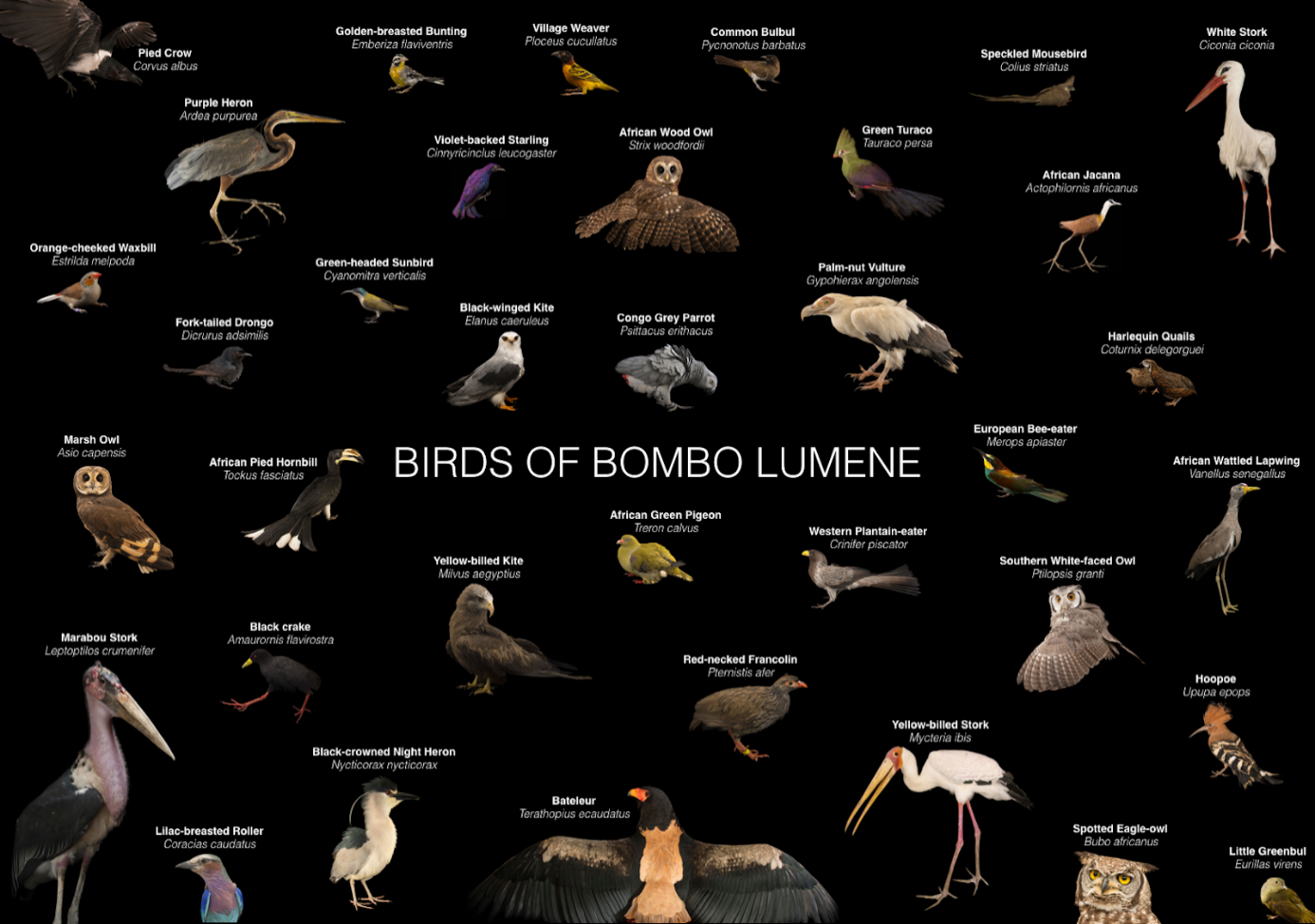
Bombo Lumene is home to an incredibly rich and diverse birdlife thanks to its unique ecosystem, which includes open and wooded savanna, gallery forest, and marshes. This rapid transition between different habitats allows visitors to spot both forest- and savanna-typical species in a single day. In 2001, BirdLife International recognized and designated Bombo Lumene as an Important Bird Area (IBA). As of April 2021, more than 255 bird species had been recorded in the reserve, and many other species likely remain unrecorded.
Image: Some of the bird species observed at Bombo Lumene. (Photos courtesy of National Geographic PhotoArk)
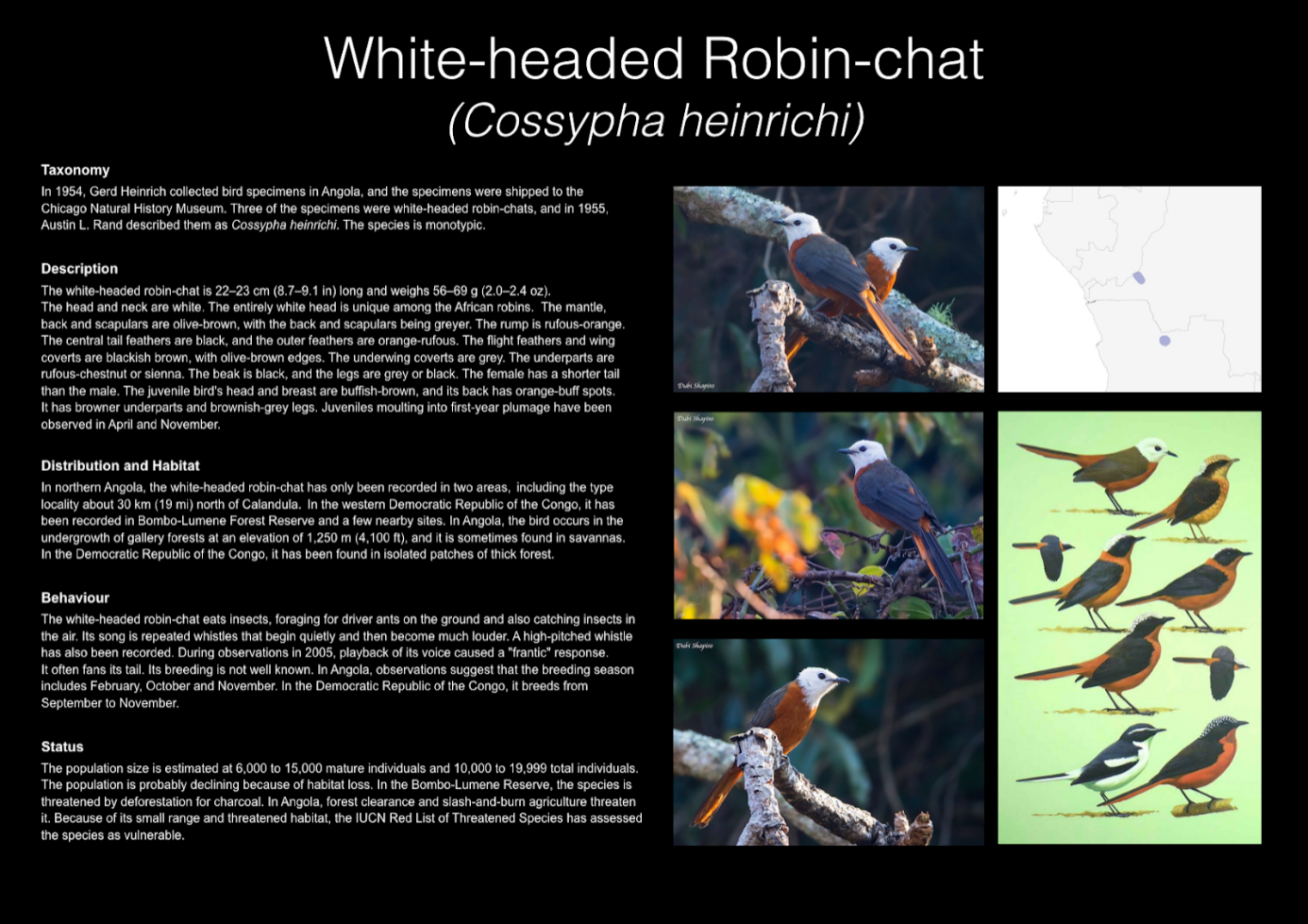
Bombo Lumene is also home to the endemic white-headed robin (Cossypha heinrichi). This small bird is found only in a small area in northern Angola and in Bombo Lumene. It is classified as Vulnerable by the IUCN. See the image below for more information.
Images used by Dubi Shapiro, Chris Rose, and eBird. Information from Wikipedia.