THE CHALLENGES
POVERTY
Poverty, lack of infrastructure, lack of education, and food insecurity are some of the main challenges facing most of the communities surrounding Bombo Lumene. They are the root causes and primary drivers of the threats to the survival of Bombo Lumene and its ecosystem.
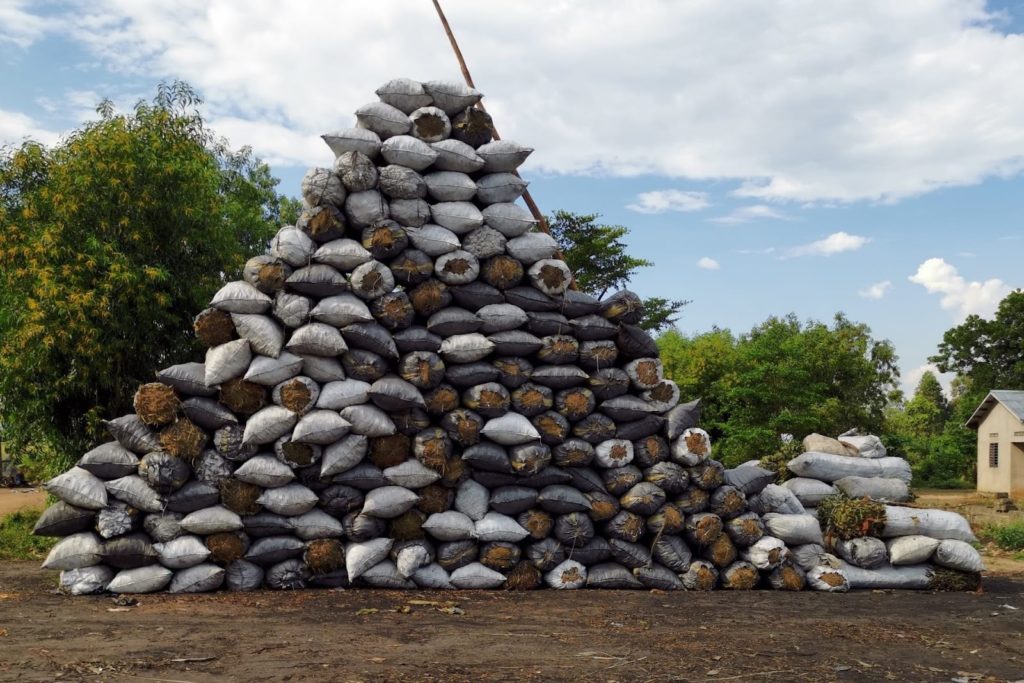
Charcoal
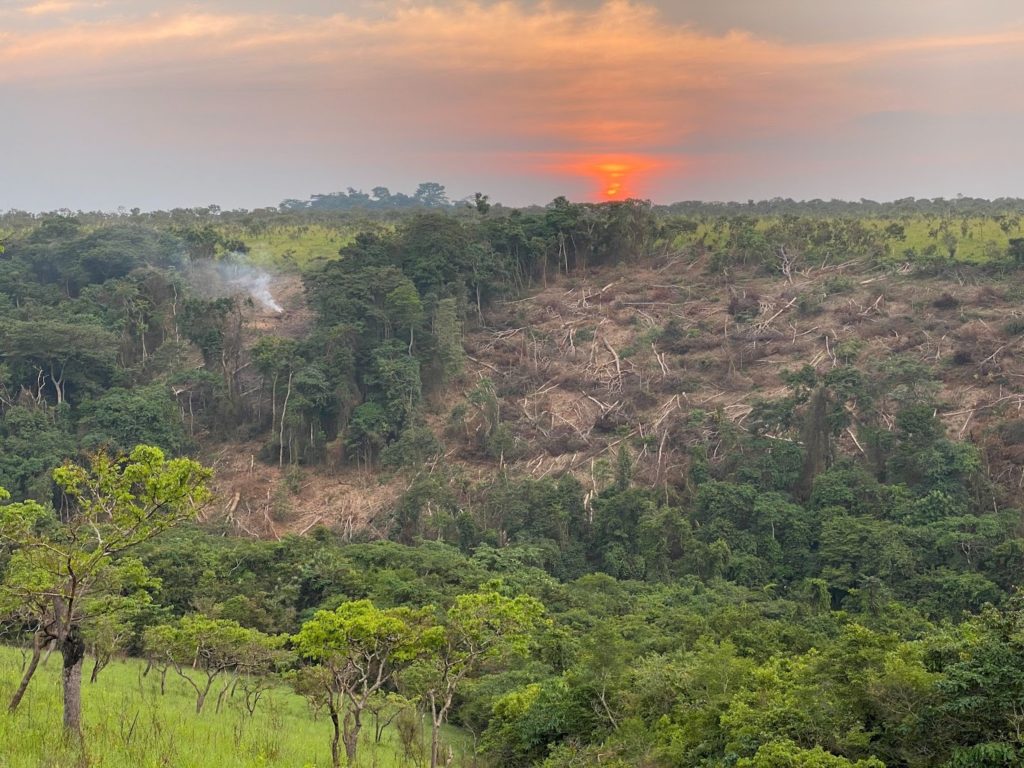
Perhaps the greatest threat to Bombo Lumene is the deforestation of its remaining primary forests to produce charcoal. Only about 19% of the population of the Democratic Republic of the Congo has access to electricity, which means that the main source of energy for most households is charcoal and firewood. With the population explosion in the nearby city of Kinshasa, demand for charcoal is skyrocketing. Local residents from neighboring communities and organized groups from Kinshasa have ventured into Bombo Lumene, destroying vast swaths of forest and using the wood to produce charcoal. This has devastated the gallery forests of Bombo Lumene to such an extent that only a very small area of forest remains intact. These forests are not only essential in combating climate change and the increasing air pollution from Kinshasa; they are also the most biodiverse areas of the reserve. This deforestation also alters weather patterns and degrades soil quality (which in turn threatens food security on the plateau), causes erosion, decimates animal populations, and releases massive amounts of CO2 into the atmosphere.
NO-TILL FARMING AND INTENSIVE FARMING
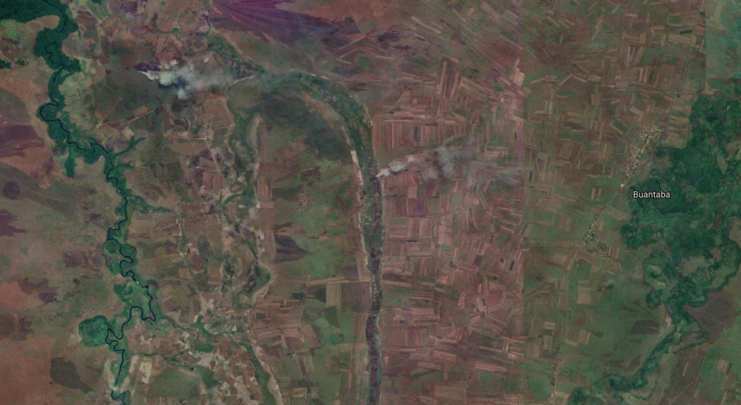
Once the forested areas have been cleared and the wood harvested and turned into charcoal, the remaining vegetation is burned. The burned vegetation temporarily improves soil quality, allowing local communities to grow crops. However, after a season or two of crop growth—and after the rains wash away any remaining nutrients into nearby rivers—the exposed soil remains completely degraded. This practice is also carried out in the savanna areas of Bombo Lumene and rapidly destroys habitats that are vital to the reserve’s remaining wildlife.
More recently, vast swaths of Bombo Lumene’s wilderness have been converted into large tracts of farmland. Much of the land is sold illegally by local authorities to residents of neighboring communities and wealthy individuals from Kinshasa. This land is then rapidly destroyed to make way for agriculture that typically involves poor farming practices.
HUMAN FOOTPRINT
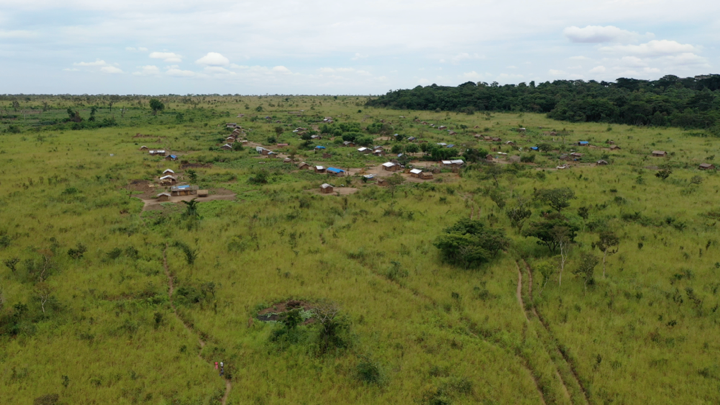
In order to produce charcoal and farm within the boundaries of Bombo Lumene, large groups of people have settled and established villages in the reserve. As the villages grow, the extent of ecological destruction also increases. Other religious groups and even NGOs have also established settlements within the reserve itself. This is somewhat contradictory, given that most of the rest of the Batéké Plateau has not yet been intensively settled by humans. However, it is likely that the presence of Bombo Lumene’s forests and wildlife attracts people seeking to exploit these natural resources.
POACHING
There are two main types of poaching in Bombo Lumene. The first type could be described as “expat poaching.” This is carried out by wealthy expatriates from Kinshasa who hunt for sport. They primarily target large mammals such as forest buffalo and large antelopes. In doing so, they often violate several national laws, such as hunting without a permit, hunting without a valid permit, hunting protected species, hunting in a strict nature reserve, hunting from a vehicle, and hunting at night. While this form of hunting decimated most populations of large mammals, it has almost completely ceased over the past five years.
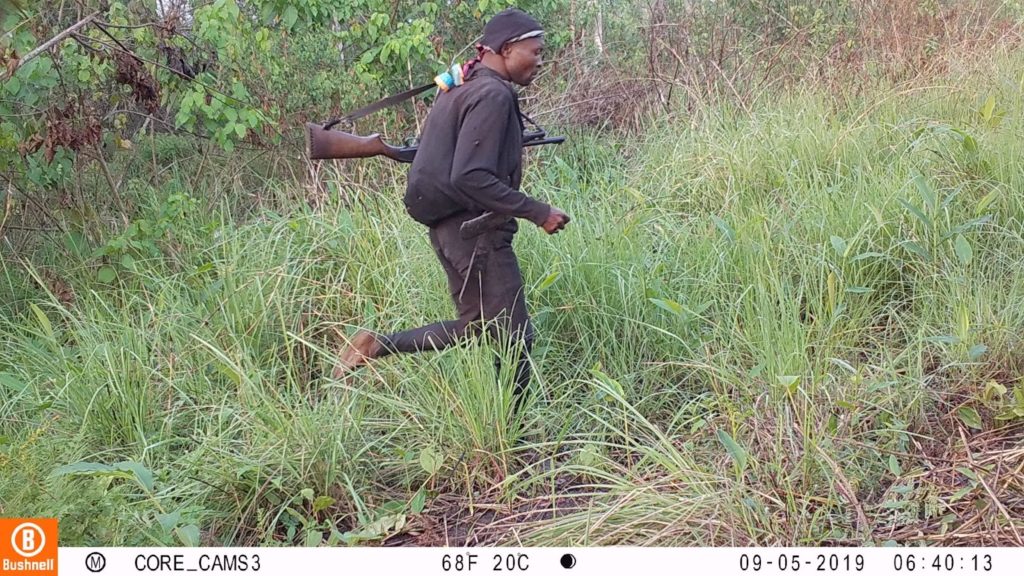
The second type—and the primary form of poaching currently threatening the reserve and its wildlife—is bushmeat poaching by local communities in the surrounding areas. While subsistence hunting was originally permitted in the “hunting zone” section of Bombo Lumene, it has now become highly commercialized. This hunting is often carried out using illegally obtained rifles, handmade firearms, and snares. They target nearly all mammal species, from pangolins and porcupines to primates and antelopes. The meat is then transported to local bushmeat markets, such as in the town of Mbankana, or shipped to larger markets in Kinshasa. Poaching has not only led to the decline of many wildlife populations in the reserve, but it is also the main reason why the animals in Bombo Lumene have become very skittish and primarily nocturnal. Unfortunately, we have seen an increase in poaching, which has been captured on our camera traps.